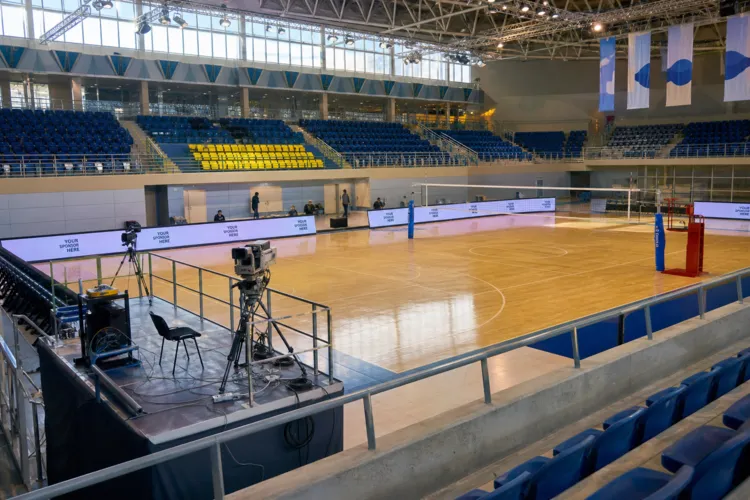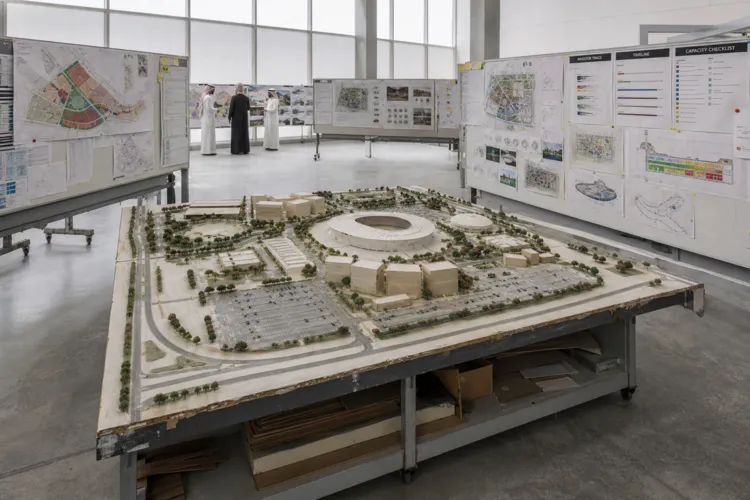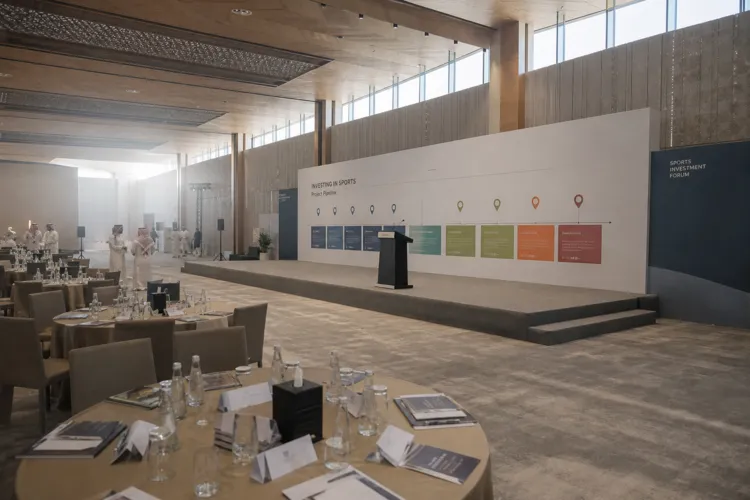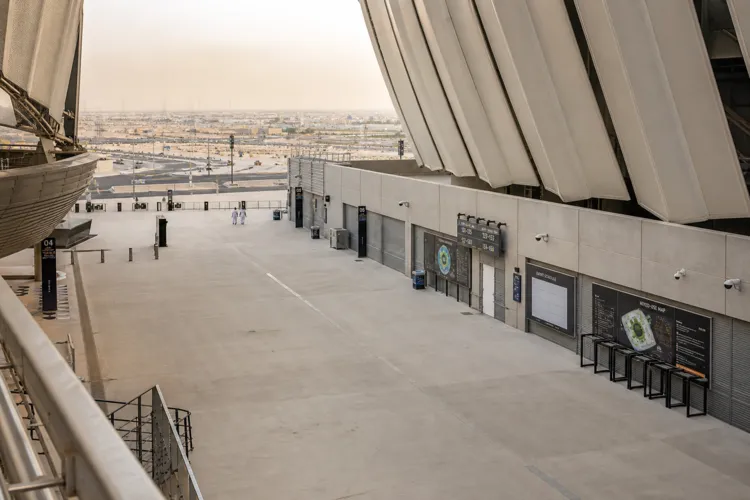
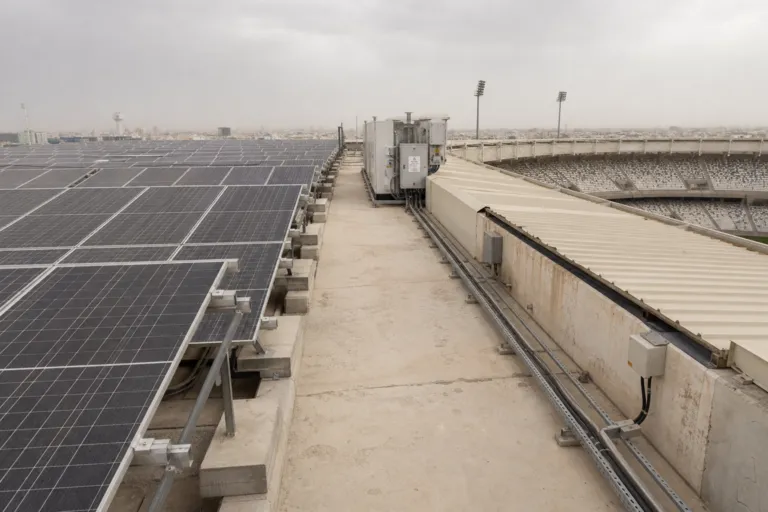
Saudi Arabia’s 2034 World Cup plan is built around 15 stadium venues across five cities: Riyadh, Jeddah, Al Khobar, Abha, and NEOM. The set blends new builds with redeveloped sites, and the stated direction is to pair advanced fan technology with “environmental awareness” and long-term, post-2034 use. Capacity targets range from 45,000 to 92,760, with the King Salman International Stadium in Riyadh planned at about 92,760 and scheduled to begin construction around 2025, with an expected opening by 2029. This scale of construction and refurbishment creates a clear buyer profile for energy vendors: projects that can support large, high-visibility venues while fitting into broader urban development districts and ecological landscapes.
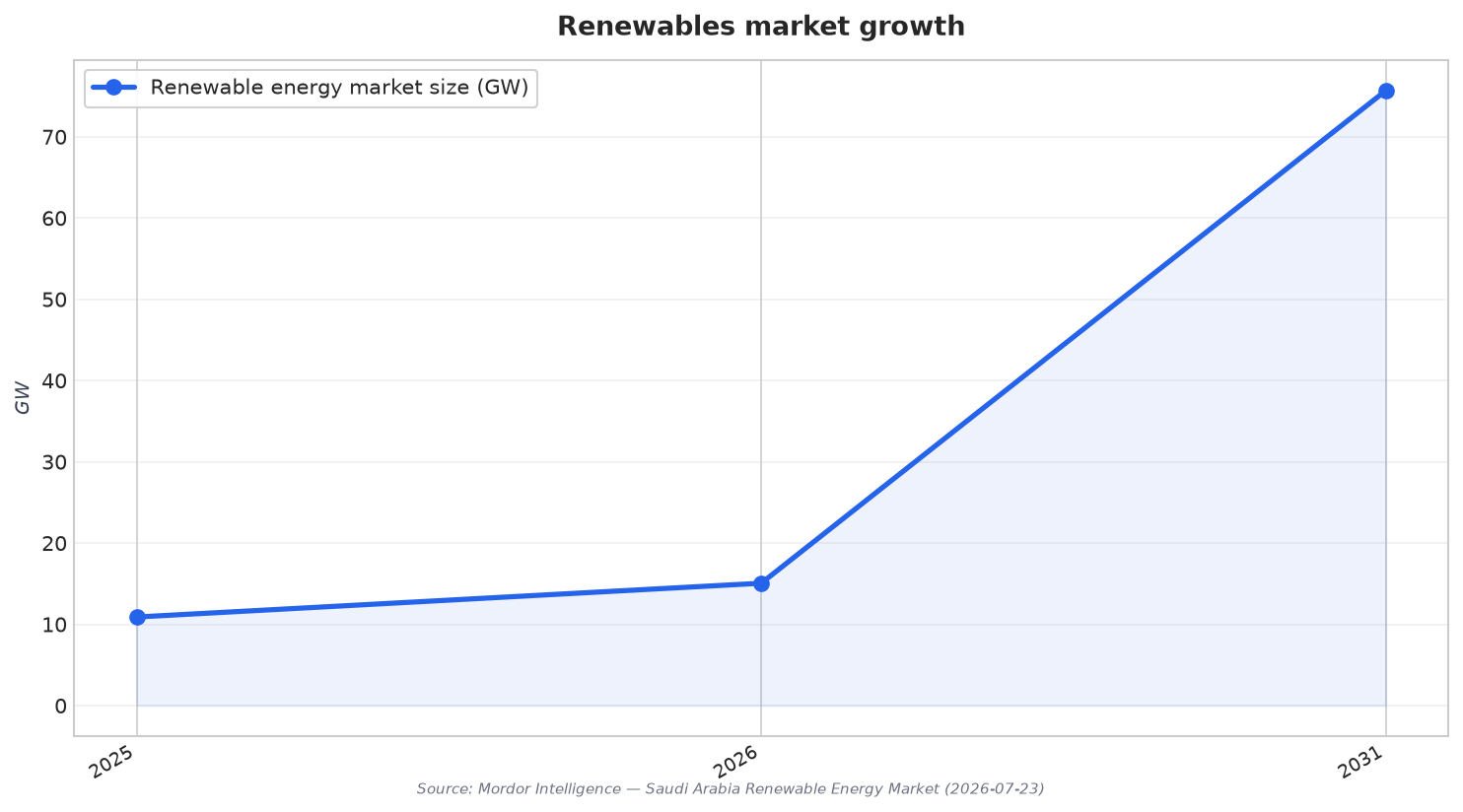
The market context matters for any stadium solar energy Saudi Arabia strategy. Mordor Intelligence estimates Saudi Arabia’s renewable energy market size in 2026 at 15.06 GW, up from 10.90 GW in 2025, with a 2031 projection of 75.68 GW and a 38.12% CAGR over 2026–2031. Solar leads that market with a 93.15% share in 2025. The same report highlights cost-competitive solar tariffs averaging USD 0.018/kWh, while also flagging operational realities, including dust-driven PV efficiency losses of 15–20% annually. For stadium operators and developers, these figures frame both the appeal of solar procurement and the need for performance planning across cleaning, O&M, and yield-risk management.
Where the Vendor Opportunity Concentrates: Tenders, Grid, and Venue Utilization
Vendor pathways into stadium energy programs are shaped by how Saudi power procurement and infrastructure spending are evolving. The U.S. Department of Commerce notes the Saudi government has pledged to generate 50% of the country’s electricity from renewable sources by 2030, and the Ministry of Energy’s spending on power and renewable energy projects is expected to reach $293 billion by 2030. On the grid side, Saudi Electricity Company (SEC) reported an ambitious capex program: $10.9 billion in 2023, a 51.8% increase from 2022, and $16 billion in 2024, a 43.8% increase on the previous year. In 2024, SEC’s directly owned capacity stood at 56.4 GW, representing 61% of the Kingdom’s total capacity. For stadium developers, these grid expansion signals can influence whether to prioritize on-site generation, corporate PPAs, or hybrid approaches aligned to interconnection readiness.
Stadium economics can also shape clean-energy scope. Roland Berger states the FIFA 2034 bid is built around 15 stadiums spanning the Kingdom, comprising four refurbishments and 11 new builds or venues currently under construction. The same analysis warns that Riyadh may face a potential oversupply of large venue capacity relative to its resident population by 2034, which raises the importance of utilization beyond matchdays. That pushes energy and sustainability vendors toward solutions that work for multi-event calendars and daily operations, not only marquee fixtures. It also increases the value of measurable efficiency measures and procurement structures that can support a stadium’s broader district use, whether tied to retail, hospitality, or community hubs integrated around the venues.
On the supply side, awarded projects and tender activity help indicate the scale and competitive dynamics that vendors will operate within. A Mordor power-market analysis notes the National Renewable Energy Program has awarded 21 projects totaling 19 GW, with seven plants equal to 4.1 GW operating by late 2024. It also states grid-connected renewables reached 6.5 GW in 2024 and are scheduled to double to 12.7 GW in 2025. Separately, Mordor’s renewable market report says ACWA Power and Masdar jointly controlled 45% of the awarded capacity in 2024, and that local-content thresholds now exceed 35%, catalyzing production of modules and inverters inside the Kingdom. For stadium-focused clean-energy vendors, that combination points to a market where local delivery, tender fluency, and partner ecosystems can matter as much as headline performance claims.
How many stadium venues are planned for Saudi Arabia’s 2034 World Cup, and where are they located?
What range of stadium capacities is planned for the 2034 venues?
What does the renewable market data suggest for stadium solar energy planning in Saudi Arabia?
How is Saudi Arabia investing in grid infrastructure that could affect stadium energy projects?
What NREP progress figures are relevant to clean-energy vendors targeting stadium-linked demand?