Saudi Arabia will host the FIFA World Cup 2034 entirely on its own, after FIFA confirmed the decision at an Extraordinary Congress on December 11, 2024. The tournament plan spans 15 stadiums in five host cities: Riyadh, Jeddah, Al Khobar, Abha, and NEOM. That geographic spread makes mobility more than a supporting detail. It becomes one of the critical delivery systems that ties together venues, hotels, and airports. The bid is also framed around national readiness, with a technical evaluation score of 419.8 out of 500 points cited in the hosting narrative.
For transport planners, the baseline numbers show why movement is central to execution. The hosting plan is backed by 230,000 hotel rooms and 16 international airports across the country. On match days, that translates into timed arrivals, security perimeters, and predictable passenger flows between airports, host-city districts, and stadium zones. It also means intercity travel must work reliably, because the tournament is not concentrated in one metro area. A separate assessment of preparations stresses that the dispersion across five cities requires robust intercity transport, positioning mobility contracts as a practical backbone of the event.
Where Mobility Contracts Meet the Stadium Build Program
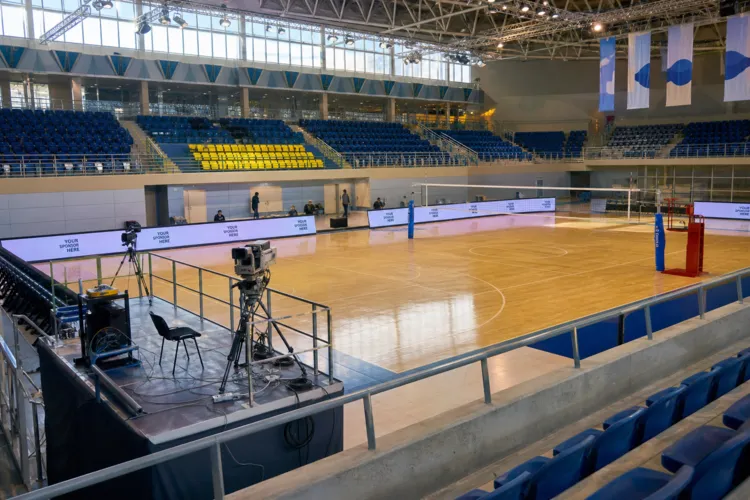
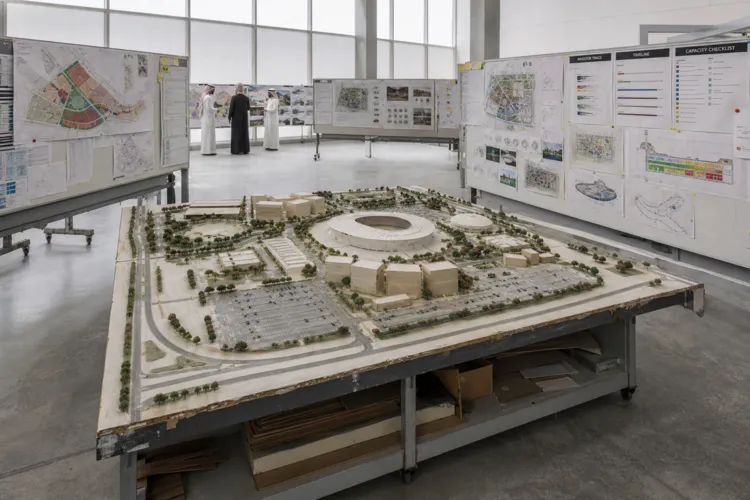
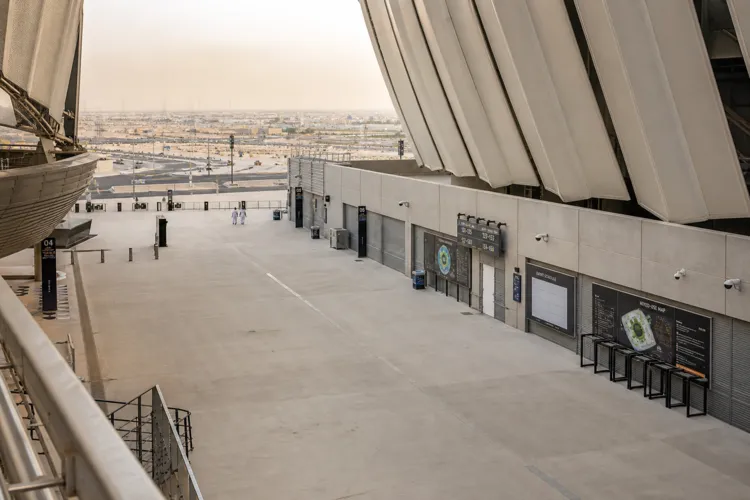
Stadium delivery and transport delivery are intertwined because both determine crowd movement patterns. Saudi Arabia’s stadium plan is built around 15 venues, with four refurbishments and 11 new builds or venues under construction, according to a stadium strategy overview. Another preparations assessment highlights the scale challenge: eleven new-build stadiums is more than any previous World Cup host. In Riyadh, the King Salman International Stadium is designated to host both the opening match and the final, and it is described as a 92,000-plus-seat venue. The larger the venue, the more its transport interfaces matter, from road access and transit capacity to last-mile operations and staffing.
Contracting pressure also rises because Saudi Arabia is running mega-event programs in parallel. A projects pipeline report describes Expo 2030 Riyadh and the FIFA World Cup 2034 as back-to-back programs with a combined pipeline exceeding US$100 billion, spanning infrastructure, stadiums, hospitality, and transport. This overlap creates practical sequencing questions for delivery teams, because the World Cup program must move from planning into execution while other giga-projects are active. The same report ties the events to economic positioning and notes that Saudi Arabia’s non-oil economy contributed 53.2% of GDP in Q1 2025, which raises the stakes for delivery credibility across sectors.
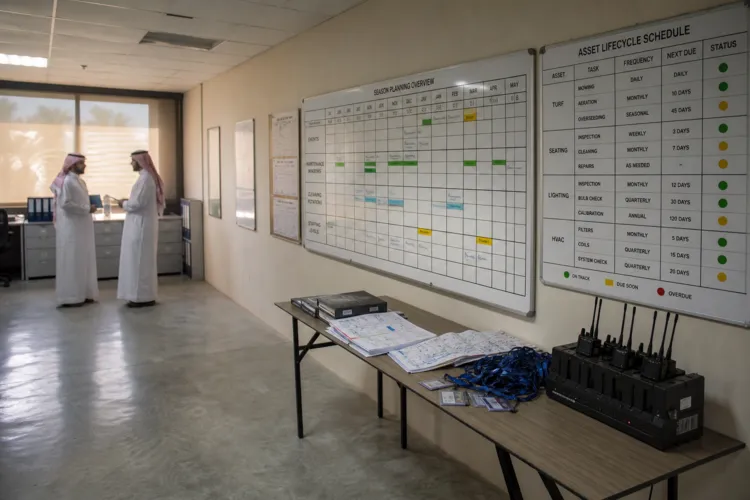
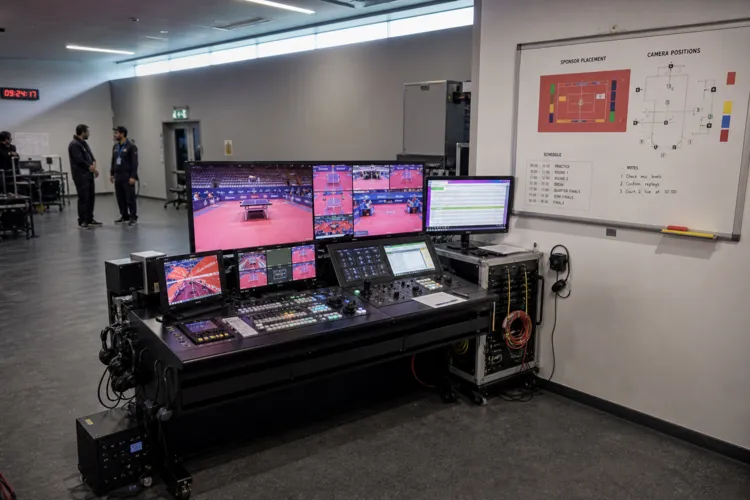
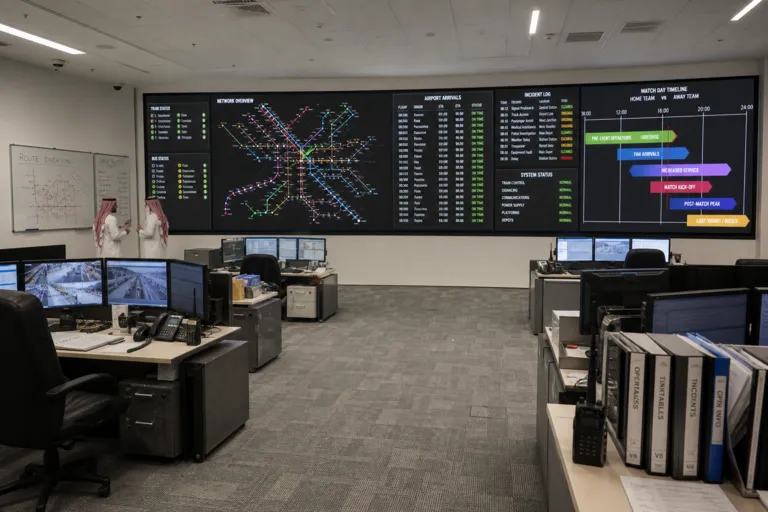
Operational mobility is not only about concrete and stations. It is also about people, systems, and peak-day choreography. One preparations assessment estimates an operational workforce of approximately 150,000 people, including transport workers alongside security, hospitality staff, medical personnel, volunteers, and FIFA operations teams. That scale implies procurement needs for fleet operations, routing, wayfinding, and coordination across the five host cities. It also explains why this World Cup’s transport narrative is inseparable from broader execution timelines. The same assessment notes that no host nation has begun stadium construction at T-8 years, while Saudi Arabia’s existing infrastructure base, particularly the Riyadh Metro and an advanced hotel development pipeline, is presented as an advantage.
Which cities will host the 2034 FIFA World Cup in Saudi Arabia?
What numbers show the scale of Saudi Arabia’s mobility challenge for 2034?
How does the stadium construction program connect to transport planning?
How big is the combined project pipeline tied to Expo 2030 and the 2034 World Cup?
How will World Cup 2034 transport infrastructure be supported operationally?